Meta Title: DIY Website Builder vs Professional Website Development: Which Option Makes More Sense for Businesses?
Meta Description: Explore the real differences between DIY website builders and professional website development, including design flexibility, SEO performance, long-term growth, and business credibility.
DIY Website Builder vs Professional Website Development
Compare DIY website builders and professional website development to understand which solution works best for long-term business growth.

Table of Contents
- Why Businesses Compare These Two Options
- Understanding DIY Website Builders
- What Professional Website Development Actually Means
- Cost Differences and Hidden Expenses
- Design Flexibility and Brand Identity
- Performance and Website Speed
- SEO Capabilities and Search Visibility
- Scalability for Future Growth
- User Experience and Conversion Impact
- Security and Website Maintenance
- Time Investment and Learning Curve
- Custom Features and Functionality
- Which Option Works Better for Small Businesses?
- Common Mistakes Businesses Make
- When DIY Builders Make Sense
- When Professional Development Becomes the Better Choice
- Final Thoughts
Why Businesses Compare These Two Options
Many businesses struggle to decide whether they should build a website themselves using a DIY website builder or invest in professional website development.
DIY platforms appear attractive because they simplify the setup process and reduce starting costs. Professional website development usually focuses more on performance, flexibility, SEO, branding, and long-term scalability.
- Budget expectations
- Business goals
- Marketing strategy
- Scalability requirements
- Technical flexibility
Understanding DIY Website Builders
DIY website builders are designed for users with little or no coding experience.
Common DIY Features
- Drag-and-drop editors
- Ready-made templates
- Built-in hosting
- Basic customization tools
- Quick website setup
These builders may work well for small projects, personal portfolios, or temporary websites.
What Professional Website Development Actually Means
Professional website development focuses on creating websites that are customized around business goals, user experience, SEO, and long-term growth.
- Custom website design
- Advanced SEO optimization
- Performance improvements
- Responsive mobile layouts
- Security optimization
Cost Differences and Hidden Expenses
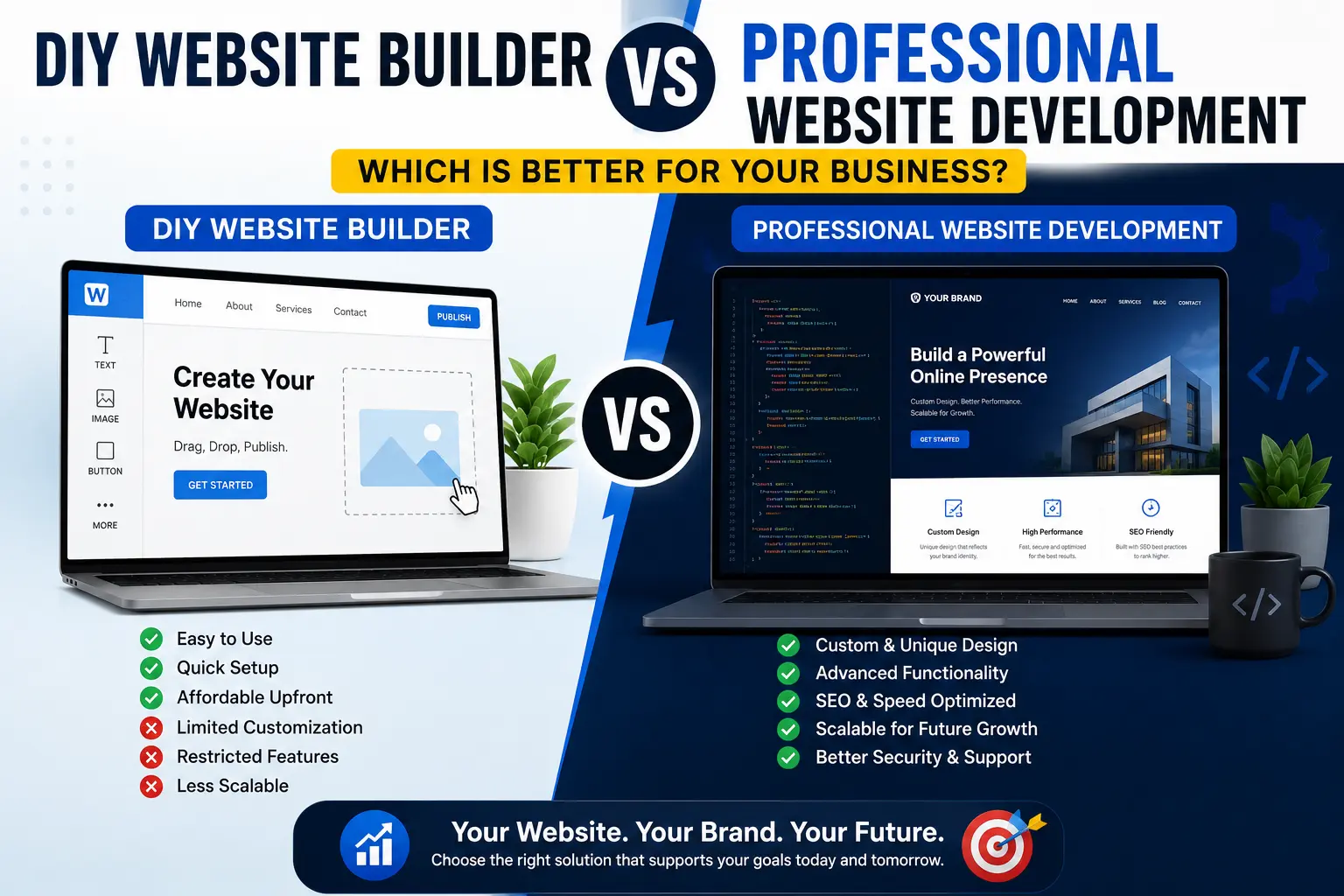
| DIY Website Builders | Professional Development |
|---|---|
| Lower starting cost | Higher upfront investment |
| Monthly subscriptions | Greater ownership control |
| Limited scaling flexibility | Long-term scalability |
Design Flexibility and Brand Identity
DIY templates can sometimes make websites look visually similar to competitors using the same layouts.
Professional development usually allows stronger branding flexibility and more unique visual identity.
- Custom layouts
- Brand consistency
- Professional visual appearance
- Unique user experience
Performance and Website Speed
Website speed affects user experience, SEO, and conversions.
Professionally optimized websites often load faster because developers optimize:
- Images
- Scripts
- Caching
- Hosting configuration
- Code structure
SEO Capabilities and Search Visibility
SEO flexibility often differs significantly between DIY platforms and professionally developed websites.
Professional SEO Advantages
- Advanced technical SEO
- Structured data optimization
- Custom URL structures
- Performance optimization
- Scalable SEO architecture
Scalability for Future Growth
Businesses often expand over time and require additional features or integrations.
- eCommerce systems
- Booking platforms
- Membership portals
- CRM integrations
- Custom automation
Professionally developed websites are usually more adaptable for future expansion.
User Experience and Conversion Impact
A website should not only look attractive but also guide visitors toward meaningful actions.
- Clear navigation
- Mobile usability
- Strategic call-to-actions
- Improved readability
- Conversion-focused layouts
Security and Website Maintenance
Website security is essential for protecting customer information and maintaining trust.
- Regular backups
- Malware protection
- Software updates
- Security monitoring
- Performance maintenance
Time Investment and Learning Curve
DIY website builders reduce coding complexity, but business owners still spend time learning systems and troubleshooting issues.
Professional developers usually handle technical tasks more efficiently, allowing businesses to focus on operations and growth.
Custom Features and Functionality
Some businesses eventually require advanced features beyond standard templates.
- Custom dashboards
- Advanced forms
- API integrations
- Booking systems
- Membership functionality
Which Option Works Better for Small Businesses?
| DIY Website Builders | Professional Development |
|---|---|
| Small personal projects | Long-term business growth |
| Temporary websites | SEO-focused businesses |
| Basic online presence | Competitive industries |
Common Mistakes Businesses Make
- Ignoring long-term scalability
- Choosing only based on low cost
- Neglecting SEO performance
- Overlooking mobile optimization
- Focusing only on appearance
When DIY Builders Make Sense
DIY builders may work well for:
- Quick website launches
- Personal portfolios
- Minimal online presence
- Very small startups
When Professional Development Becomes the Better Choice
Professional website development often becomes more valuable when businesses require:
- Advanced SEO optimization
- Custom branding
- Scalable website architecture
- Better conversion optimization
- Advanced integrations and automation
Need a Professional Business Website?
Build a fast, SEO-friendly, and conversion-focused website designed to support long-term business growth and online visibility.